Happy Mother's Day SVG: A Stitcher's Review
As an embroidery designer who has digitized and tested countless files for commercial and personal use, I approach every new machine embroidery design with a critical eye. When evaluating the Happy Mother s Day SVG Design, Mom Svg, my first thought isn't just about how pretty it looks on a screen; it is about how those vector lines will translate into physical thread on fabric. This specific design carries a sweet, sentimental mood that immediately suggests warmth and family connection. Visually, it strikes a balance between playful typography and classic maternal affection, making it a strong contender for spring and early summer collections. However, moving from a digital graphic to a tangible embroidered patch or garment requires understanding the interplay between the file’s geometry and real-world textiles.
Translating Digital Lines to Real Thread
The initial impression of this digital embroidery file is one of versatility. The layout appears optimized for center-chest placement or as a focal point on smaller items. In my experience reviewing Crafts category assets, designs labeled for "sweet T-shirts" often suffer from being too delicate for actual stitching. Fortunately, this Mom Svg seems to possess enough structural integrity to hold its shape. The lettering likely utilizes a combination of satin stitch for bold outlines and potentially fill stitch for larger areas, which is crucial for coverage without excessive density.
When I look at this design, I am mentally checking the stitch density. For a Mother’s Day theme, we want softness, not a bulletproof vest effect. If the original SVG has intricate serifs or thin connecting lines, these must be adequately widened during the digitizing process to prevent needle breaks or thread shredding. A well-executed version of this design should allow the fabric texture to breathe through the stitches, maintaining the lightweight feel appropriate for the season. This balance is what separates a professional finished product from a hobbyist attempt that feels stiff and uncomfortable against the skin.
Real-World Application: The Custom Sweatshirt Test
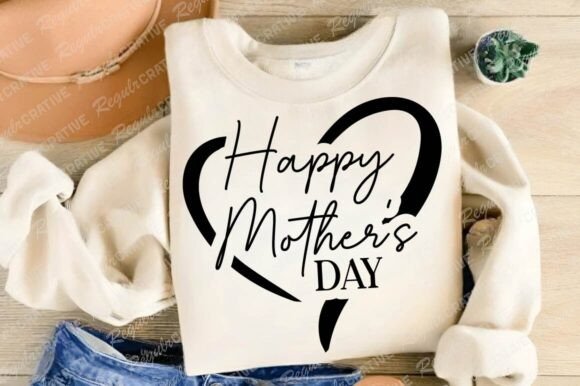
To truly evaluate this asset, let us consider a specific scenario relevant to many Etsy seller and small shop product creators: producing a custom embroidered sweatshirt for a boutique drop. Imagine preparing a cream-colored French terry sweatshirt featuring the Happy Mother s Day SVG Design, Mom Svg on the left chest. This is a high-demand item for spring gifting.
In this context, the design needs to perform under production conditions. Sweatshirt fleece is textured and prone to shifting. As I visualize hooping this garment, I am considering whether the design includes adequate underlay stitches to stabilize the pile before the top stitching begins. Without proper underlay, the letters could sink into the fabric, losing legibility. Furthermore, because this is intended as a personalized gift, the emotional impact relies on clarity. If the "Mom" script is too small or the loops are too tight, the sentiment gets lost in the fuzz of the fleece. This design works best here if the digitizer has accounted for the push-and-pull distortion inherent in knit fabrics, ensuring the final stitch-out matches the crispness of the digital preview.
Navigating Fabric Challenges and Hoop Limitations
While this design shines on stable knits, caution is required when venturing into more difficult substrates. I would advise testing the Happy Mother s Day SVG Design, Mom Svg carefully before committing it to stretchy performance wear or very thin baby clothes. On lightweight cotton jersey, a dense satin stitch can cause puckering that no amount of pressing can fully fix. For baby embroidery projects, you may need to reduce the density or switch to a lighter running stitch outline to keep the garment soft and safe for sensitive skin.
Similarly, be mindful of hoop size constraints. If you are adapting this for a cap or a curved surface, the horizontal span of the text might exceed the safe stitch area of a standard cap frame. Curved surfaces distort straight lines, so a design that looks perfectly level on a flat tote bag design might appear arched or warped on a hat. Always simulate the curve in your software or run a test stitch on a scrap cap before running a full production batch. For dark fabrics, ensure the design includes a white underlay or knockdown stitch; otherwise, the dark fabric grain will show through lighter pastel threads, muddying the visual appeal and reducing the perceived value of the handmade product.
Commercial Viability and Brand Consistency
For creative entrepreneurs and apparel decorators, this design offers significant commercial potential, provided it aligns with your brand aesthetic. The "sweet" descriptor suggests a traditional, perhaps slightly vintage or cottage-core vibe. If your shop specializes in edgy, modern minimalism, this particular embroidery project might feel out of place. However, for sellers focusing on family milestones, nursery decor, or holiday gifts, it is a valuable asset.
Customer trust is built on consistency. If you use this Happy Mother s Day SVG Design, Mom Svg across multiple products—from aprons to pillow covers—ensure the scale remains proportional. A design that looks perfect at 4 inches on a shirt might look comically small on a large tote bag or overwhelmingly huge on a baby bib. Maintaining visual harmony across your catalog reinforces professionalism. Additionally, when creating printable mockups for your listings, remember that digital renders often lack the texture of real thread. I always recommend including at least one photo of a physical stitch-out in your listing to manage buyer expectations regarding texture and sheen.
Essential Pre-Stitch Checklist for Makers
Before you load this embroidery file into your machine for a client order or inventory build, run through this practical checklist derived from years of troubleshooting:
- Verify Licensing: Confirm whether your purchase includes commercial rights for selling finished goods or if it is strictly for personal use. Never assume; always check the specific terms provided by the creator.
- Test on Scrap Fabric: Never stitch directly onto a final product without a test run. Use a fabric weight and weave identical to your intended project to check for registration issues or tension problems.
- Check Thread Contrast: View the design in black and white within your software to assess value contrast. If the design relies solely on color differences rather than tonal variation, it may disappear on similarly colored fabrics.
- Stabilizer Selection: Match your stabilizer to the fabric, not just the design. Cutaway for stretchy knits, tear-away for stable wovens, and wash-away for towels or napped fabrics where residue is unacceptable.
- Inspect Small Details: Zoom in to 200% or higher. Are there tiny jumps? Is the text legible at the intended size? If the smallest letter height is under 6mm, consider resizing or simplifying to avoid thread breaks.
- Mockup Validation: Create both light and dark background mockups. A design that pops on white might vanish on navy. This ensures your marketing materials accurately represent the custom apparel you are selling.
Final Thoughts on Design Integrity
The Happy Mother s Day SVG Design, Mom Svg represents a classic opportunity in the Graphics and crafts space to create meaningful, sellable items. Its success ultimately depends on the maker's willingness to respect the technical limitations of embroidery. By treating this file not just as art but as a set of mechanical instructions for a needle, you elevate the quality of your output. Whether you are crafting a single holiday embroidery keepsake for your own mother or fulfilling fifty orders for an Etsy shop, the attention to detail in stabilization, scaling, and fabric selection is what transforms a simple SVG into a cherished heirloom. Always prioritize the tactile reality of the stitch over the digital perfection of the screen, and your customers will recognize the difference in every thread.